


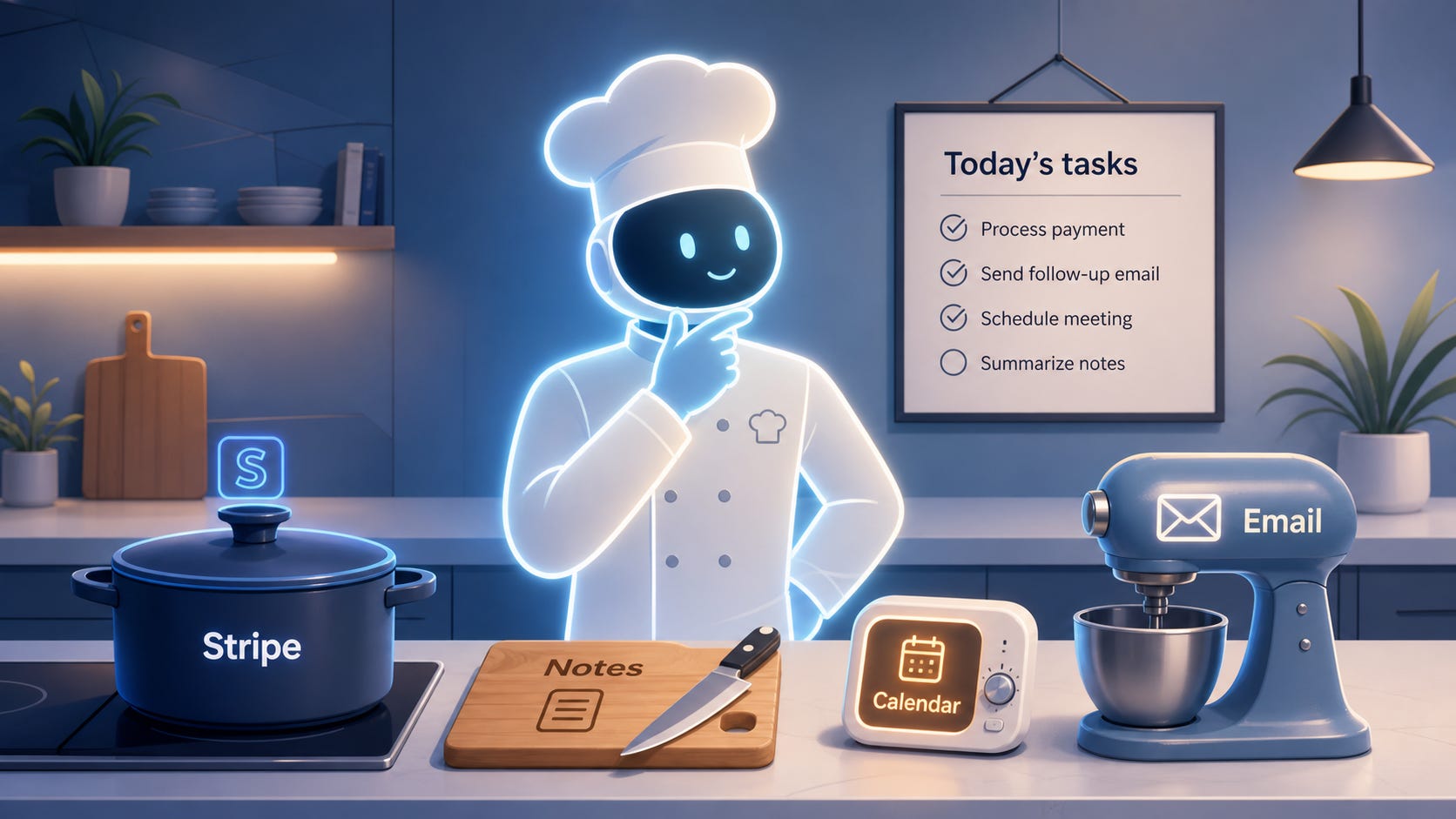
An AI agent is like a chef in a kitchen: you give it an order, it figures out what needs doing, grabs the right tools, and works through the steps to get to the result. In AI terms, an agent is a system that can pursue a goal with some autonomy, using tools and iterative steps rather than stopping at a single answer.
Most people first meet AI as a chatbot. You ask a question, it replies, and the interaction ends there. An agent is what you get when that same model is allowed to keep going: make a plan, use a tool, check what happened, adjust, and continue until the job is done.
The chef metaphor works because a chef isn’t useful just because there’s a kitchen full of equipment. A chef is useful because they know how to combine tools, ingredients, and techniques to produce a meal. An agent works the same way: the tools are there, but the real value is in deciding what to use, in what order, and when to course-correct.
Say you tell an agent, “Make sure every customer on my annual plan got their invoice and welcome pack.” That’s a chef being handed a dinner order. The agent might check Stripe for the customer list, look in your notes for the welcome docs, compare the two, and then draft the missing emails or flag edge cases for review. You didn’t tell it every click; you told it the outcome.
That’s the key difference between an agent and a plain chatbot. A chatbot mostly talks. An agent takes a goal and turns it into a sequence of actions.cloud.google+3
This is where MCP servers matter. If MCP servers are the doors into Stripe, your notes, your calendar, and your files, the agent is the chef moving around the kitchen, opening those doors when needed, and bringing the ingredients together into something useful. The server gives access; the agent decides how to use it.
In a second-brain setup, that changes the feel of the whole system. Instead of asking, “What do I know about this client?” and getting a generic answer, you can ask, “Pull the notes, check whether they paid, look at our last meeting, and suggest what I should do next.” The agent can combine those sources into one working view of reality.
So the simplest way to think about an agent is this: it’s the chef, not the recipe. It’s the thing in the system that takes the order, picks the tools, applies the right skills, and keeps going until there’s an actual result on the table.